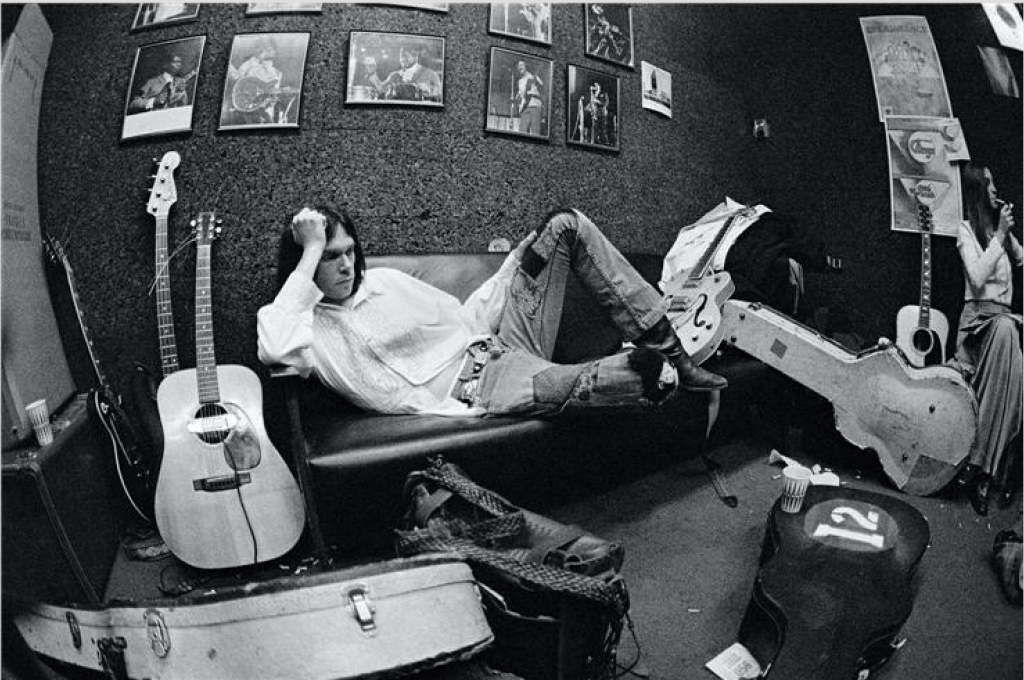
Despite the minimal fuel I’ve tried to give my social media algorithms, I still manage to be served my preferred “crunchy” content, full of ranch-handing, van-living, Yosemite supercuts, often set to nostalgic soundbites, one of the most prevalent being Neil Young’s “Old Man.” I’m absolutely loving this Neil Young resurgence. Even beyond van life, tons of aesthetic, cozy apartment tour videos feature Crosby, Stills, Nash, & Young’s “Our House,” and I’ve even noticed a recent uptick in streams of Fiona Apple’s “Heart of Gold” cover. This is particularly special given Young’s recent return to Spotify. Neil, along with Joni Mitchell, pulled his music from Spotify in January 2022 in opposition to the platform’s exclusive contract signed with Joe Rogan. For years, their music sat “grayed out,” unplayable, in other words, unavailable and unlistenable (more on that another time–methods for boycott in the modern music industry). Needless to say, the contract has expired, and Young is back in more ways than one.
If I’m being honest, as fun as it is to see this viral resurgence, I fear social media does a disservice to Young’s storied career. As cool as it is that young people (no pun intended) are being exposed to new (old) music, these 15-second-max clips threaten to truncate the impact he had on music forevermore. How does one release music beginning in the mid 1960’s and manage to headline Saturday night at Glastonbury 2025? Only a legend could bring not one, but several groups to Rock & Roll Hall of Fame status with his mere collaboration.
My parents would probably giggle at (and fact check) this take on the importance of Neil Young’s life and career. Frankly, Raoul Hernandez wrote a wickedly good article in the Austin Chronicle archiving Neil from childhood to 2009 (present at the time), and I won’t even try to replicate such a thing. What I can do, however, is speak for a younger generation that grew up hearing artists like Young as an echo of the past, the sounds of a world we can only read about or watch in retrospect, from sepia tones, to B&W, to color. As a 2000-born baby, a digital native with a Luddite streak, and a three-time social media account full-on deleter turned rabid Spotify listener, I fall somewhere smack-dab in between the internet-obsessed and the grass-touchers. Cherry-Picked has been an opportunity to better bridge these parts of myself, and the shortform video content featuring “Old Man” provided yet another beautiful, perfect, juicy, and plump cherry for the picking.
Neil’s start and early career have the biggest chokehold on my listenership, so this is what I wish more content creators knew when picking “Old Man” as their next audio. Neil’s mainstream music journey began in 1966 with Buffalo Springfield. His deeply influential stint as a member of the LA-based, Canadian/American rock collective launched his relationship with fellow bandmate Stephen Stills (hi, CSNY), and served as a major influence in the development of folk/country rock as a genre. Their self-titled debut album features “For What It’s Worth,” far and away their biggest and most memorable hit (~750 MM streams), even to someone born in the new millennium. Thanks to 103.3 KLOU for keeping FWIW in their 2007 rotation and to my dad for tuning in on rides to-and-fro gymnastics practice. BS’s debut and sophomore album titles made me chuckle, so much so that my monthly playlist overflows often follow their template: Buffalo Springfield (nov 2024) and Buffalo Springfield Again (nov 2024 again). Young left BS to go solo in 1968, then came crawling back shortly after. The band released one more aptly named album, Last Time Around, and subsequently disbanded. A brief seven-show reunion took stage in 2011, but talks of a extending to 30+ more shows went dead silent when Young realized he didn’t want to relive his past in perpetuity. Buffalo Springfield favorites live in cherry-picked: neil young.
Enter: Crazy Horse era. By 1969, Neil Young started jamming with the band that later became Crazy Horse. Neil wrote a couple of hit rock songs under the influence of an intense flu fever, one being my personal favorite from this era, “Cinnamon Girl.” “Cinnamon Girl[’s]” elusive muse has been left up to much debate – Young claims the song isn’t really about anybody (hello, he had a 102+ degree fever?), but regardless of who ~she~ was, explaining why he “would be happy the rest of [his] life with a Cinnamon Girl” to his wife posed… tricky. Domestic drama aside, “Cinnamon Girl” has one of the coolest outros in all of rock music. Neil Young and Crazy Horse’s biggest hit was probably this one, but Spotify streams alone would argue for “My My, Hey Hey.” This prompted yet another question worth asking (a cherry worth picking) – how much does streaming reflect not only popularity, but influence? Especially for music outside of one’s own lifetime, how else are we to know what was popular and/or impactful (not equivalent metrics), when stream volume only tracks listenership from 2008 and on? I digress.
Around the same time, in 1969, Neil was slated to join the Crosby, Stills, and Nash threesome. Apparently, Graham Nash, of the Hollies fame, was hesitant to bring Young into the fold until he had met him personally, and an infamous Bleecker Street coffee shop date wiped any concerns Nash had about the surprisingly funny, personable Young. Far Out claims that Graham ended up liking him so much that he said, “after that breakfast I would have made him the President of Canada.” The collab was a done deal, and Neil’s joining launched the already burgeoning popularity of the CSN trio to superstar status as CSNY. But it was far from smooth sailing, and the collaboration was short-lived. From Nash, in Far Out again:
“It was a different band when Neil joined… not a lot of people understand that. They think it’s just an added voice. But it’s not. It’s an added attitude. Neil brings a sharper edge. I was gonna say a darker feeling, but I don‘t mean that in a negative way. He brings this edge to us that we don’t have. And, of course, you have to take into account his ability to play lead guitar against and with Stephen…Crosby, Stills, Nash and Young are a completely different band than CS&N.”
A tale as old as time, creative and personal differences got in the way. The collaboration was extremely short-lived, and Neil committed to the solo (and band-backed) track in 1970. Later interviews with Neil revealed that he left Buffalo Springfield and CSNY for the same reason. In a 2021 interview with Howard Stern for Sirius XM, and later cut by UCR, Neil said:
“I didn’t break up with music; I didn’t break up with love. … I just wanted [the music] to be nurtured. I wanted to take care of it. If the love was suffering because the situation wasn’t right, I wanted to take the love somewhere else where it would do better.”
Now that we’re knee-deep in these weeds, we can finally focus on Neil’s solo career. At the risk of completely ignoring the vast majority of his music, with Neil having released over 40 studio albums over his career (!!! unreal!), I will nonetheless float along down the mainstream. 1969 (according to Spotify) and 1968 (according to the rest of the internet) saw Neil’s debut solo release, the self-titled Neil Young. Low on streams compared to his later work but performing moderately well at the time, this album has a notably country feel. My generation tends to credit Taylor Swift with mastering dexterous genre-hopping, but she certainly did not invent it. Neil is one of many, like Bonnie Raitt, who managed to master versatility, to expand beyond their debut genre(s), expectations thrown to the wayside, to make the music they wanted to make. I love this debut album. Vocally, I hear the influence of Buffalo Springfield, and guitar-wise, you can hear where Crazy Horse was headed. These influences and precursors are loudest to me in “The Loner.”
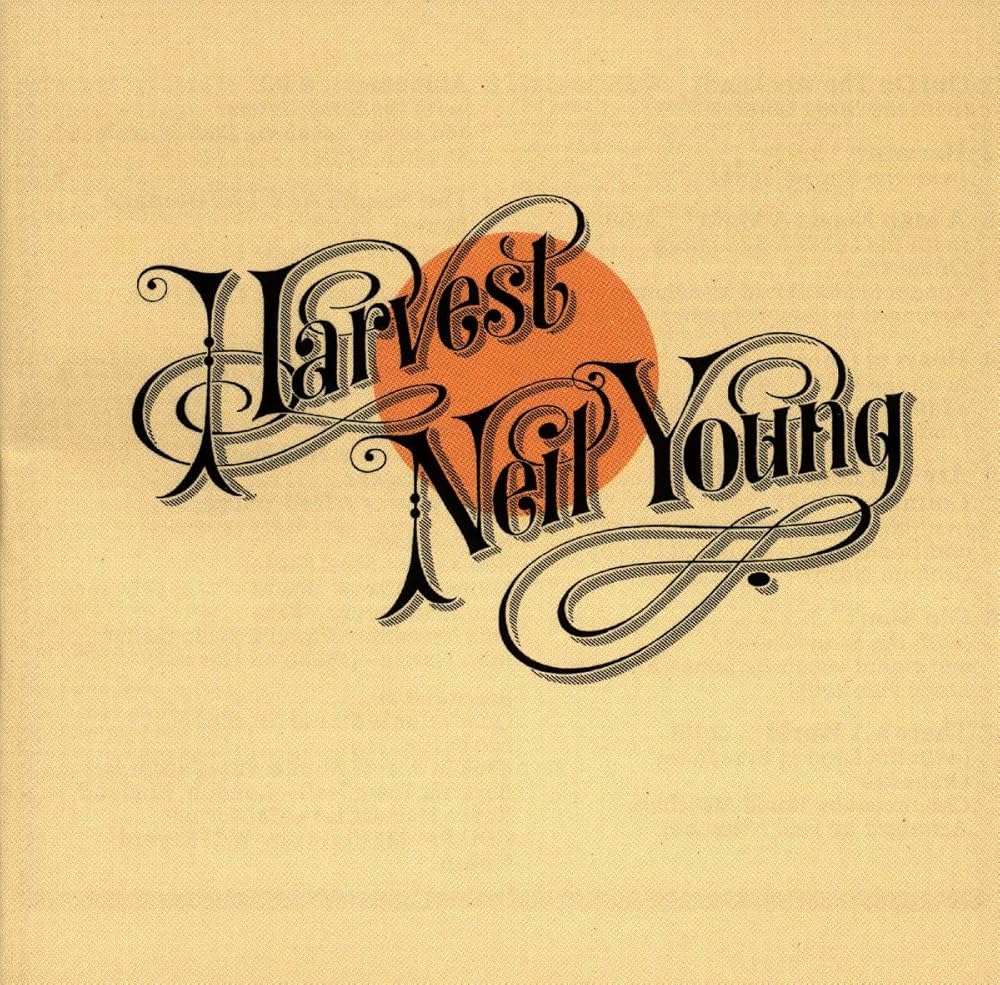
Jump a few years ahead to 1972’s Harvest, from which we get the ever-TikTok-ed “Old Man” and “Heart of Gold.” What social media misses from this album is (well, all of it, but especially) “Out on the Weekend,” “A Man Needs a Maid,” “Alabama,” and the theatrical “There’s a World.” Honestly, the intro to TAW always reminds me of “No One Mourns the Wicked” from Wicked, the first musical I ever saw on Broadway. This just further emphasizes the massive scope of sound Neil Young could wrap his arms around. Neil Young and Harvest are my favorite albums of his by far, but the farther along I got writing this, the more I realized that I have a lot more listening to do… need I remind us all, 40 (!) studio albums of ranging critical acclaim!
I dove deep enough on Neil that I learned a little about who he is outside of his music, and randomly enough, it turns out that Neil developed a love for model trains because they allow him to connect with his two sons, both with cerebral palsy. He even has a warehouse on his property with more square footage than a starter home dedicated solely to model trains. I did not, until now, think I would be linking trains.com in my writing, but alas, here we are.
Most recently, Neil has been releasing music with his band, the chrome hearts, who’ll take the stage with him this weekend at Glastonbury. Talkin to the Trees came out earlier this month and managed to chart pretty highly in the UK and US. Admittedly, it’s hard to have fallen in love with an artist’s younger sound only to hear it change, inevitably maturing and aging, but even this new (old) Neil I will listen to and support.
If I wanted to go even deeper on Neil’s life, I’d read Jimmy McDonough’s Shakey: Neil Young’s Biography for a deeply researched, chronicled account of Young’s career, and Neil’s own autobiography Waging Heavy Peace: A Hippie Dream to get a less linear, but more personal account of his life.
My favorite era of music will always be the late ‘60s to early ‘70s, at the confluence of Laurel Canyon songwriting, folk, rock, roots, country, and pop, with a purity of recording that the current studio environment can’t help but lose. Neil Young didn’t just snag a foothold, but stomped a footprint of Bigfoot proportions in and across these genres, and as much as I may whine about the underplaying of his influence on music via social media, it’s pretty amazing that his music relentlessly connects with us, even if just for a viral, aesthetically-pleasing 15 seconds. In those short breaths, we each still feel something because of it. And how cool to watch Young’s clipped soundscapes wash over a nomadic younger generation as they trek through our National Parks in their DIY buses, vans, and truck trailer homes, eager to experience it all and still just figuring it out, 15 seconds at a time.

🍒
 Cherry-Picked
Leave a comment